


Call us on: 01481 264202
24 hours a day, 365 days a year

Choosing a memorial is one of the most personal things we do for someone we love when they pass away, and it creates a lasting place to remember them. It’s a decision that often comes weeks or even months after the funeral, once there is a little space to think, and there is no need to rush it. From traditional headstones to small plaques, memorial benches and personal keepsakes, there are more options available than many families realise, each one a chance to reflect the person in your own way. In this guide we explore the memorial options available in Guernsey, what to consider when choosing, typical costs and local rules to be aware of, along with some unique ideas for creating a truly personal tribute.
What is a memorial, and why it matters
A memorial is a permanent, named place where family and friends can visit and remember someone who has died. Memorials come in many different types and styles, which allows people to personalise and find a memorial that feels reminiscent of your loved one. For many people, having somewhere to return to, a fixed point in the world that belongs to their loved one, becomes an important part of grieving and of keeping a memory alive.
Memorials come in many forms, from traditional headstones to small plaques and personal keepsakes, so there is something to suit every wish and every budget. The right choice is simply the one that feels true to the person and brings comfort to those who remember them.
Types of memorials and headstones
There is far more choice than many families expect. Below are the main types of memorial, from traditional upright headstones to smaller markers and keepsakes.
Headstones and upright memorials
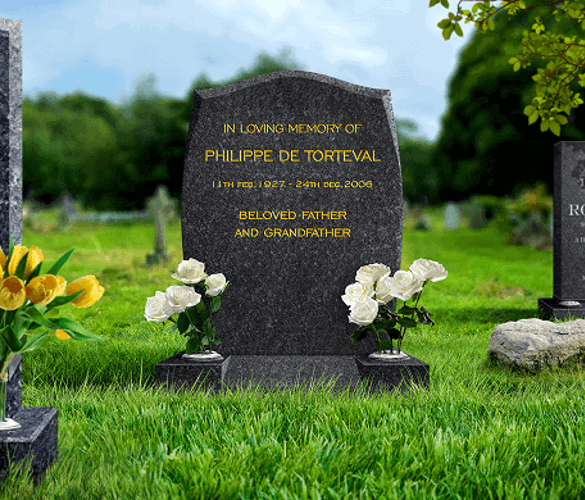
The traditional and most familiar choice. An upright headstone stands at the head of the grave and offers plenty of room for an inscription. They come in a range of styles and finishes, most commonly in granite, which may be left rustic, polished, or honed to a smooth matt finish. Marble and other natural stones are also used in some settings.

Wall plaques
Wall plaques are fixed to a memorial wall rather than placed on a grave, and are commonly used for cremation plots, gardens of remembrance and memorial walls. They provide a named place to visit where a full headstone is not possible or not wanted.

Flat markers, grave markers and tablets
Lower-profile options that lie flat or gently sloped at the head of the grave rather than standing upright. They are often used where cemetery or churchyard rules limit the height of memorials, or where a family prefers a simpler, more understated tribute.

Books and vases
A book memorial is a low stone shaped like an open book, offering two pages for an inscription and sitting close to the ground. A memorial vase is a stone or metal holder designed to hold flowers at the resting place, and can be chosen on its own or alongside another memorial.
Cremation memorials
For ashes that have been interred, there are smaller markers and niches designed specifically for cremation plots. These offer the same sense of a permanent, named resting place on a smaller scale. If you are considering laying ashes to rest, our guide to the interment of ashes explains the options in more detail.
Choosing a memorial
A few things are worth thinking about as you decide. There is no wrong answer, only what feels right for you and your loved one.
The setting. Where the memorial will be placed, whether a cemetery, churchyard, parish burial ground or garden of remembrance, will shape what is possible, as each has its own rules on size, material and style.
Burial or cremation. A full-size headstone suits a traditional grave, while smaller markers, niches or plaques are designed for interred ashes.
The person themselves. Many families choose a style, material, motif or wording that reflects the character, faith or passions of the person being remembered.
Materials and upkeep. Different stones weather and age differently. Polished granite tends to stay looking new for longer, while rustic and natural finishes have a softer, more traditional feel and may need a little more care.
Wording and inscription. Consider the name, dates and any message, verse or motif you would like. There is often a limit on the number of characters, depending on the size of the memorial.
Budget. Costs vary widely with the size, material and complexity of the memorial, as well as cemetery or parish fees, so it is worth deciding on a rough budget early.
Local rules and regulations in Guernsey
Cemeteries, churchyards and parish burial grounds in Guernsey each have their own regulations covering the size, material, height and wording of memorials, and approval is usually required before a memorial can be installed. There is also often a settling period after a burial before a headstone can be placed, to allow the ground to settle first.
These rules vary from one burial ground to another, which can be difficult to navigate at an already difficult time. As a local funeral director, Beckfords know the requirements of the island’s cemeteries and churchyards, and can handle the approvals and liaise with the stonemason on your behalf, so you can be confident everything is done correctly.
Unique and personal memorial ideas
A memorial does not have to be conventional. Alongside, or instead of, a traditional headstone, there are many ways to create something more personal.
Bench and tree plaques. A memorial plaque fixed to a bench or set beside a tree creates a living, restful place to sit and remember, often in a spot that meant something to the person.
Memorial jewellery and keepsakes. Small keepsakes, from engraved pendants to items that hold a little of the ashes, allow families to keep their loved one close wherever they go.
Personalised engravings and motifs. Beyond names and dates, a memorial can carry a favourite verse, a line of a song, a symbol, or an image that captures a passion or belief, making it unmistakably theirs.
When and how to arrange a memorial
There is no need to arrange a memorial straight away. Because of the settling period after a burial, a headstone is often not placed until several months later, which also gives families time to decide on exactly what they want without pressure.
When you feel ready, the process usually runs something like this:
- Choosing the type, material and design
- Agreeing the wording and any motifs
- Obtaining approval from the cemetery, churchyard or parish
- and finally the making and installation of the memorial by a stonemason, which can take some weeks.
Beckfords can guide you through each of these steps, from the first conversation about options to the day the memorial is installed.
Contact Beckfords
 01481 264202
Frequently asked questions
How long after a burial can you put a headstone up?
It is usually several months, commonly around six, before a headstone can be placed, to allow the ground to settle after the burial. The exact period depends on the cemetery or churchyard, so it is best to confirm locally.
How much does a headstone cost in Guernsey?
Costs vary widely depending on the size, material, finish and complexity of the design, as well as cemetery or parish fees and the inscription. Because of this range, the best way to get an accurate figure is to discuss your wishes and receive a written quote. Beckfords can talk you through the options at different price points.
What’s the difference between a headstone, a marker and a plaque?
A headstone is an upright memorial that stands at the head of a grave. A marker is a lower-profile memorial that lies flat or gently sloped, often used where upright memorials are not permitted. A plaque is a smaller inscribed panel, frequently fixed to a memorial wall, bench or cremation plot.
Do I need permission to install a memorial in Guernsey?
Yes. Approval is usually required from the relevant cemetery, churchyard or parish before a memorial can be installed, and each has its own regulations on size, material and wording. A local funeral director can obtain this approval for you.
What can I write on a headstone?
Most families include the person’s name and dates, often with a short message, verse or line that reflects them. There is usually a limit on the number of characters, which depends on the size of the memorial and the rules of the burial ground. Religious or personal symbols and motifs can often be added too. Read our guide here for more information.
How do I clean and care for a headstone?
Gentle cleaning with clean water and a soft cloth or brush is usually all that is needed, and is best done occasionally rather than vigorously. Avoid harsh chemicals, wire brushes or pressure washers, which can damage the stone or its lettering. Polished granite generally needs less upkeep than rustic or natural finishes.
Can I have a memorial for ashes?
Yes. Where ashes have been interred, there are markers, niches and plaques designed specifically for cremation plots and gardens of remembrance, offering the same permanent, named place on a smaller scale.
How long does it take to make a memorial?
Once the design and wording are agreed and approval is granted, the making and installation of a memorial typically takes some weeks, as each is crafted and inscribed individually. Your funeral director or stonemason can give you a clearer timescale for your chosen design.
Beckfords can help at any stage
There is no single right way to remember someone; the most fitting memorial is simply the one that feels true to the person you are honouring. Whether that’s a classic headstone, a quiet plaque in a garden of remembrance, or a keepsake to hold close, what matters is that it brings you comfort and a place to return to. When you feel ready to take this step, our team at Beckfords is here to guide you through every option with patience and care, helping you create a memorial that captures a life well lived and offers a lasting place for remembrance.